


They should treat scaffolding as a temporary structure that needs the same attention as any other high-risk system on site. Done well, Safety Requirements for Temporary Scaffolding on Construction Sites reduce falls, dropped objects, and structural failures.
What laws and standards apply to temporary scaffolding in Australia?
Australian scaffolding work is governed by state and territory WHS laws, supported by national model codes and Australian Standards. Safety Requirements for Temporary Scaffolding on Construction Sites typically align with the WHS Regulations for high-risk construction work and AS/NZS 1576 (Scaffolding series) and AS 4576 (Guidelines for scaffolding).
They should confirm the exact regulator guidance that applies where the site is located, such as SafeWork NSW, WorkSafe Victoria, or Workplace Health and Safety Queensland.
Who is responsible for scaffolding safety on a construction site?
The PCBU, principal contractor, and scaffold supplier each have duties, and those duties overlap. Safety Requirements for Temporary Scaffolding on Construction Sites expect duty holders to coordinate so that design, erection, use, and alteration are controlled.
They should also ensure scaffolders, supervisors, and workers understand site rules, access points, load limits, and what to do if something looks unsafe.
When is a scaffolding design and engineering sign-off required?
A design is generally required when scaffolding is complex, unusual, or outside “standard” configurations, including when it is sheeted, highly loaded, or built on sloping or unstable ground. Safety Requirements for Temporary Scaffolding on Construction Sites are strongest when they demand a documented design for anything that could affect stability.
They should keep design documentation on site, including drawings, load classifications, tie patterns, and any assumptions about foundations and wind exposure.
What qualifications and licences should scaffolders hold?
In Australia, scaffolding work needs the right HRW licence class for the scope, commonly basic, intermediate, or advanced. Safety Requirements for Temporary Scaffolding on Construction Sites rely on competent people erecting, altering, and dismantling the scaffold, not just “someone who has done it before.”
They should also confirm inductions, SWMS coverage, and supervision, especially for apprentices or labourers assisting with tasks around the scaffold.
What site planning should happen before scaffolding is installed?
They should plan the scaffold location, access routes, exclusions, and interfaces with traffic, plant, powerlines, and public areas. Safety Requirements for Temporary Scaffolding on Construction Sites start before delivery, with a pre-start risk review and clear sequencing so trades do not work under incomplete scaffolds.
They should also plan for weather exposure, emergency access, and where materials will be loaded so weight is controlled from day one.
How should foundations and soleboards be set up to prevent collapse?
The scaffold must sit on a firm base that can carry the expected loads without settlement. Safety Requirements for Temporary Scaffolding on Construction Sites require proper soleboards and baseplates, plus extra consideration where the ground is fill, landscaping, or near excavations.
They should check drainage and water run-off, because saturated soil can undermine legs quickly, particularly after heavy rain on Australian sites.
What bracing, ties, and stability controls are typically required?
Stability comes from correct bracing, tying to the structure, and controlling uplift and sway. Safety Requirements for Temporary Scaffolding on Construction Sites mean they should install ties to the specified pattern, keep bracing complete, and never remove components to “make room” for a trade.
They should also manage wind risk if the scaffold is sheeted or near coastal areas, because sheeting can turn a scaffold into a sail.
What edge protection is required to prevent falls?
Edge protection usually includes toprails, midrails, and toe boards or equivalent, installed on all open sides where a person could fall. Safety Requirements for Temporary Scaffolding on Construction Sites also support using brickguards, mesh, or infill panels when there is a risk of tools or materials falling.
They should treat gaps, returns, and loading areas as high-risk points and ensure protection is continuous, not patched together.
How should safe access and egress be provided?
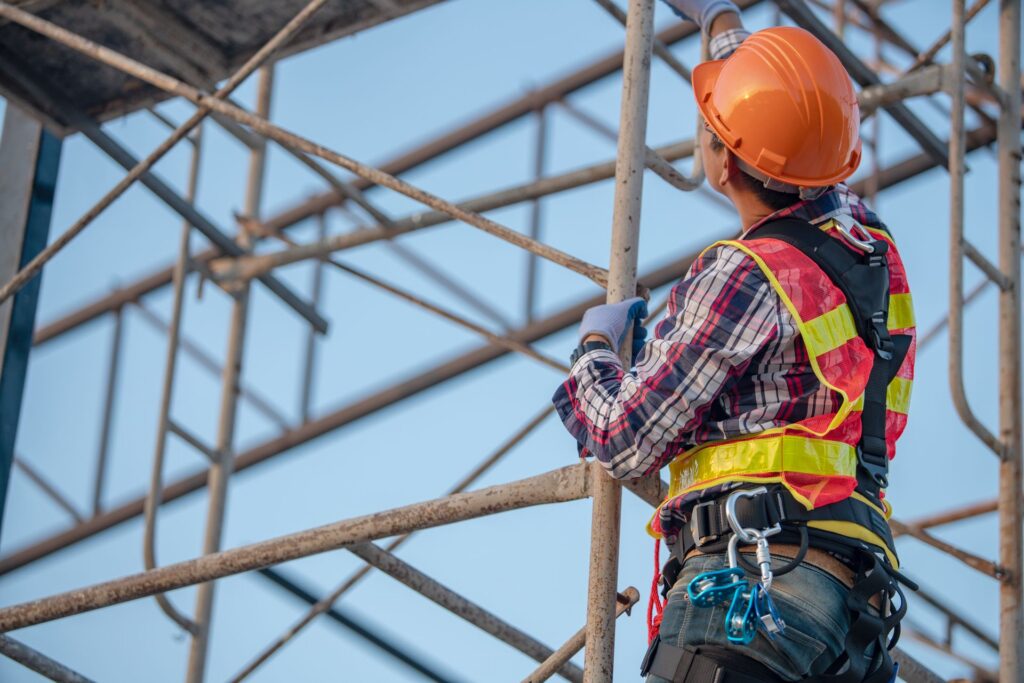
Workers should reach platforms via purpose-built access, commonly stair modules or internal ladders with ladder gates or self-closing access points. Safety Requirements for Temporary Scaffolding on Construction Sites discourage climbing frames, braces, or the outside of the scaffold.
They should keep access ways clear, well-lit, and separated from loading zones, so people are not forced to step around stored materials to get on and off the scaffold.
How are load ratings, platform decking, and housekeeping managed?
They should select scaffold components that meet the required duty rating and ensure platforms are fully decked with securely fixed planks. Temporary scaffolding safety requirements also involve staying within specified load limits and accounting for point loads created by pallets, render tubs, stacked bricks, and other materials placed on the platform.
They should also enforce housekeeping: clean platforms, no trip hazards, and no stockpiling “just for a moment,” because clutter contributes to falls and overloading.
What controls reduce falling objects and protect people below?
Exclusion zones, overhead protection, and containment are key where people could be struck from above. Safety Requirements for Temporary Scaffolding on Construction Sites commonly involve toe boards, debris mesh, brickguards, tool lanyards, and controlled lifting and loading procedures.
They should also coordinate with other trades so no one works under active loading bays or beneath areas where cutting, grinding, or demolition is occurring.
How often must scaffolding be inspected, tagged, and maintained?
They should inspect scaffolds before first use, following any alteration, after severe weather, and at regular intervals specified by site procedures and risk assessments. Temporary scaffolding inspection requirements may also include a formal scaffold handover, tagging system, and documented inspection records to confirm that the structure remains suitable for use.
They should remove access or tag the scaffold “Do Not Use” if anything is missing or damaged, and they should not allow partial fixes that leave hazards in place.
What is required when scaffolding is near powerlines or electrical hazards?
They should treat overhead and nearby power as a major risk, using exclusion distances, planning delivery routes, and avoiding conductive components where necessary. Safety Requirements for Temporary Scaffolding on Construction Sites require coordination with the electricity network operator if work must occur close to lines.
They should also manage electrical leads, temporary switchboards, and lighting so cables do not create trip hazards or get caught on frames and ladders.
How should weather, wind, and environmental conditions be managed?
They should monitor wind, rain, and heat and adjust work methods accordingly. Safety Requirements for Temporary Scaffolding on Construction Sites are not static, because conditions change quickly on Australian sites, especially in coastal wind corridors and storm seasons.
They should stop work if surfaces become slippery, if wind makes handling sheets unsafe, or if visibility drops, and they should re-check ties and plumb after major weather events.
What should a SWMS and toolbox talk cover for scaffolding work?
A SWMS should define the steps, hazards, and controls for erection, alteration, dismantling, and working on the scaffold. Safety Requirements for Temporary Scaffolding on Construction Sites are reinforced when they run toolbox talks that cover site-specific issues like loading bays, public protection, and access routes.
They should also cover “don’t touch” rules: who can alter components, what to do if a plank lifts, and how to report damage without delay.
How should work changes and scaffold alterations be controlled?
Any change, even moving a single plank or removing a tie, can affect stability. Safety Requirements for Temporary Scaffolding on Construction Sites mean they should only allow authorised scaffolders to alter the structure, followed by re-inspection and re-tagging.
They should also manage trade pressure, because “just a quick adjustment” is one of the most common pathways to incomplete edge protection and missing bracing.
What should they do if they suspect the scaffold is unsafe?
They should stop using it immediately, restrict access, and escalate to the supervisor or scaffold contractor for assessment. Safety Requirements for Temporary Scaffolding on Construction Sites prioritise isolation of the hazard over productivity, because a small defect can lead to a major collapse or fall.
They should document the issue, keep people clear until it is repaired, and only return it to service after a competent person confirms it is safe.
What are the practical takeaways for safer temporary scaffolding?
They should focus on competent installation, stable foundations, complete edge protection, safe access, load control, and frequent inspection. Safety Requirements for Temporary Scaffolding on Construction Sites work best when everyone treats the scaffold as a live system that changes with weather, sequencing, and trade activity.
They should also keep records, enforce “authorised alterations only,” and make it easy for workers to report faults without pushback.
FAQs (Frequently Asked Questions)
What are the key safety requirements for temporary scaffolding on construction sites in Australia?
The key safety requirements for temporary scaffolding in Australia include competent design, compliant components, safe access, ongoing inspection, and clear responsibilities. Scaffolding should be treated as a temporary structure requiring the same attention as any other high-risk system to reduce falls, dropped objects, and structural failures.
Which laws and standards govern temporary scaffolding work in Australia?
Temporary scaffolding work is governed by state and territory Work Health and Safety (WHS) laws, supported by national model codes and Australian Standards such as the AS/NZS 1576 scaffolding series and AS 4576 guidelines. Compliance with WHS Regulations for high-risk construction work is essential, while guidance from regulators such as SafeWork NSW and WorkSafe Victoria should also be followed. These requirements are relevant when assessing temporary mesh fencing requirements for safe construction sites.
Who holds responsibility for scaffolding safety on a construction site?
Responsibility is shared among the Person Conducting a Business or Undertaking (PCBU), principal contractor, and scaffold supplier. These duty holders must coordinate to control design, erection, use, and alteration of scaffolds while ensuring scaffolders, supervisors, and workers understand site rules, access points, load limits, and procedures if hazards arise.
When is it necessary to have a scaffolding design and engineering sign-off?
A documented design and engineering sign-off are required when scaffolding configurations are complex, unusual, or non-standard—such as when scaffolds are sheeted, highly loaded, or erected on sloping or unstable ground. This documentation should include drawings, load classifications, tie patterns, and assumptions about foundations and wind exposure to ensure scaffold stability.
What qualifications and licences must scaffolders possess in Australia?
Scaffolders must hold the appropriate High Risk Work (HRW) licence class corresponding to their scope of work—commonly basic, intermediate, or advanced. Safety protocols emphasize competence over experience alone; thus inductions, Safe Work Method Statements (SWMS), supervision especially of apprentices or labourers assisting with scaffold tasks are critical for compliance.
How should safe access and egress be provided on temporary scaffolds?
Safe access to scaffold platforms should be via purpose-built means such as stair modules or internal ladders equipped with ladder gates or self-closing access points. Climbing on frames or braces is discouraged. Access routes must be kept clear, well-lit, separated from loading zones to prevent workers from navigating around stored materials when entering or exiting the scaffold.